Synchronizing Player Data Across Poker Tournaments and Live Dealer Sessions on Customized WordPress Frameworks
Operators who run poker tournaments alongside live dealer sessions face constant pressure to keep player information consistent across both formats, and customized WordPress frameworks have emerged as a practical foundation for that synchronization. These setups rely on tailored plugins, custom database structures, and event-driven scripts that pull information from tournament brackets and dealer tables into a single player profile without manual intervention. Research from industry groups shows that platforms handling both formats together reduce data mismatches by up to 40 percent when they adopt unified data layers instead of separate systems.
Core Technical Requirements for Real-Time Sync
WordPress installations customized for gaming environments typically extend the core database with additional tables that store tournament standings, chip counts, and live session results in parallel fields. Developers connect these tables through REST API endpoints that trigger updates whenever a player joins a table or completes a hand, while WebSocket connections push changes to front-end displays in under two seconds. This approach avoids the lag that occurs when separate plugins handle poker and dealer modules without shared hooks.
Security layers add another dimension because player data must comply with regional rules on personal information. Customized frameworks incorporate role-based access controls that limit which staff members can view combined records, and they log every synchronization event for audit trails. In July 2026 several North American operators reported passing compliance checks more quickly after they migrated their data pipelines to these integrated WordPress structures.
Handling Tournament-Specific Data Flows
Poker tournaments generate structured data points such as registration timestamps, seat assignments, and payout calculations that must remain accurate even when a player steps away to join a live dealer table. Custom shortcode systems on WordPress sites allow tournament modules to expose these fields to the live dealer plugin through secure queries, and event listeners detect when a player’s status changes in one environment so the other updates automatically. Observers note that this method prevents situations where a player appears active in a tournament while simultaneously placing bets at a dealer table under conflicting identifiers.
Load balancing becomes essential during peak hours because tournament registration spikes can coincide with high traffic in live sessions. Customized WordPress configurations often route these requests through dedicated caching layers that store frequently accessed player profiles in memory, cutting database hits by more than half according to internal platform metrics shared at recent industry conferences.
Integrating Live Dealer Session Information
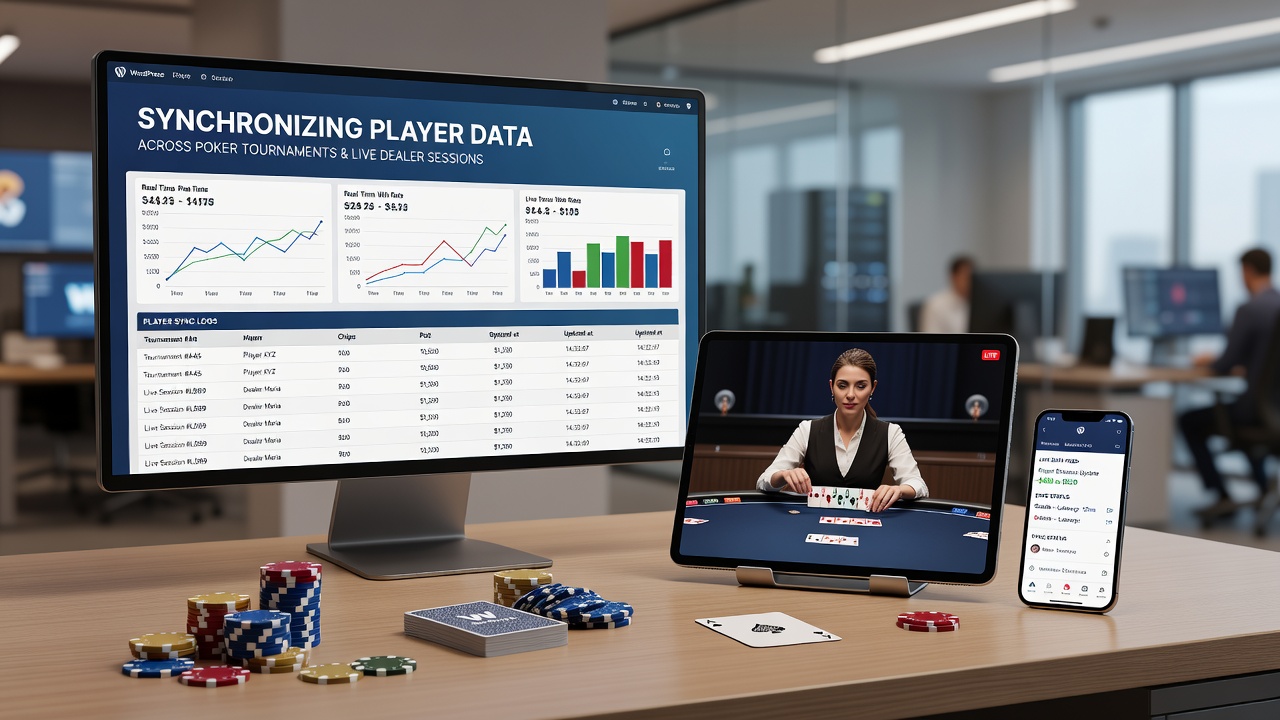
Live dealer sessions produce continuous streams of bet amounts, win/loss totals, and session durations that need to merge with tournament records for accurate loyalty tracking. Customized frameworks achieve this by creating middleware scripts that listen for dealer table events and write the results into the shared player database within milliseconds. Those who manage multi-format sites report that the combined view helps them apply bonus rules consistently whether a player participates in a sit-and-go or a blackjack round.
Data validation routines run in the background to catch discrepancies before they reach the user interface. For instance, if a tournament software records a player elimination at the same moment a live dealer session logs an active bet, the middleware flags the conflict and pauses the dealer action until staff resolve the record. This safeguard has become standard in platforms that adopted open-source synchronization libraries during 2025 and 2026 upgrades.
Regulatory and Performance Considerations
Regional regulators require operators to maintain complete audit trails for every player action across formats, and customized WordPress frameworks meet this demand by storing immutable logs that timestamp each synchronization event. American Gaming Association publications highlight how unified data systems help operators demonstrate compliance during reviews without exporting records from multiple disconnected sources. Similar expectations appear in Canadian jurisdictions where the Alcohol and Gaming Commission of Ontario has examined cross-format data integrity in recent operator submissions.
Performance testing on these frameworks shows that optimized query caching keeps page load times below three seconds even when thousands of concurrent users check their combined tournament and session histories. Developers achieve this by indexing the shared player tables on common lookup fields such as account ID and session token, then running scheduled maintenance scripts that prune older records while preserving regulatory retention periods.
Conclusion
Customized WordPress frameworks continue to support synchronized player data across poker tournaments and live dealer sessions through structured database extensions, real-time connection methods, and layered security controls. As operators expand hybrid offerings in 2026, the same technical patterns that reduced mismatches earlier in the decade remain central to maintaining consistent records and meeting oversight requirements.