
Synchronizing Dealer Session Data with Personalized Slot Recommendation Engines Through Plugin Architectures on Gaming-Focused Sites
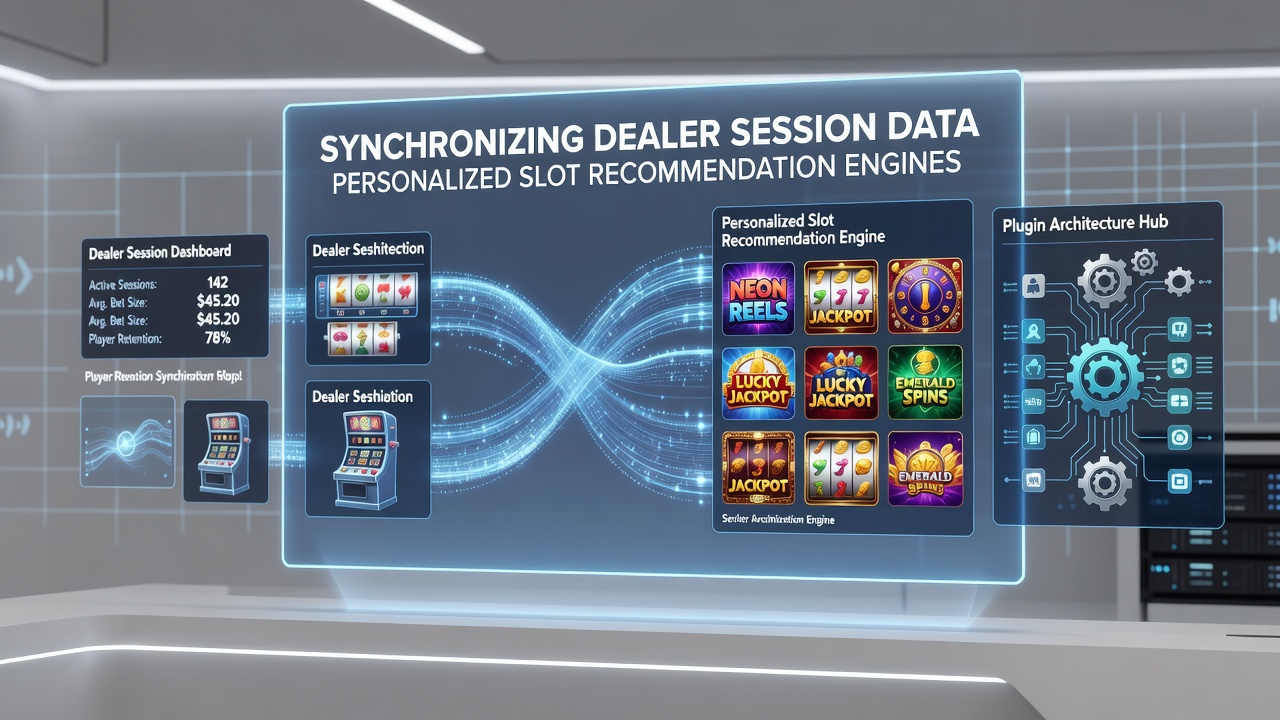
Plugin architectures on gaming-focused sites enable the synchronization of dealer session data with personalized slot recommendation engines, allowing platforms to connect live table interactions directly to tailored game suggestions for players. Data from dealer-hosted sessions, including player choices, session duration, and betting patterns, flows into recommendation systems that adjust slot offerings in real time through modular plugin components. Observers note that this integration relies on standardized data exchange protocols within frameworks such as those built for content management systems commonly used in iGaming environments.
Core Components of Data Synchronization
Dealer session data encompasses metrics captured during live interactions, such as card draws, wheel spins, and participant responses, which plugins then map to user profiles for slot personalization. These plugins operate as interchangeable modules that hook into existing site structures, pulling information from live dealer software and pushing it toward algorithm-driven engines that rank slot titles based on observed preferences. Researchers at institutions studying digital entertainment systems have documented how event listeners within these plugins trigger updates without requiring full platform rebuilds, maintaining continuity across sessions that span multiple game formats.
Personalization engines process this incoming data by applying matching rules, for instance aligning a player's affinity for high-stakes table decisions with volatility levels in suggested slots. The architecture supports bidirectional flow, where slot engagement outcomes loop back to refine future dealer session prompts, creating closed-loop adjustments. Gaming operators in regions including North America and parts of Asia have implemented such setups, with data pipelines handling thousands of concurrent sessions through optimized query caching that plugins manage independently.
Plugin Architecture Mechanics in Practice
Developers structure these plugins around hook systems and API endpoints that facilitate seamless data handoffs between dealer platforms and recommendation modules. A typical implementation registers listeners for session start and end events, then serializes relevant attributes into formats compatible with machine learning models running in the background. Those who maintain gaming sites report that this modularity reduces downtime during updates, as individual components can receive patches while the core synchronization logic remains active. In July 2026, several platforms expanded these capabilities to incorporate additional metadata layers, such as regional regulatory flags that influence which recommendations surface for compliance reasons.
Integration extends to multi-format environments where poker tables, sports modules, and slot libraries coexist, allowing a single plugin set to coordinate across them. For example, a dealer session involving rapid decision-making might elevate recommendations for quick-spin slots, while longer strategic play steers toward feature-rich titles. External validation of these patterns appears in industry analyses from organizations like the European Gaming and Betting Association, which tracks technology adoption rates across member jurisdictions.
Technical Implementation and Data Handling
Secure transmission protocols protect session data as it moves through plugin layers, employing encryption standards that align with requirements from bodies such as teh Nevada Gaming Control Board and similar authorities in Australia. Plugins often leverage database triggers to detect changes in dealer logs and propagate them instantly to the recommendation engine, minimizing latency that could disrupt player experiences. Studies from academic sources on real-time systems highlight how event-driven designs outperform batch processing in dynamic gaming contexts, enabling the kind of fluid synchronization operators now deploy.
Scalability considerations arise when sites experience traffic spikes, prompting plugin developers to incorporate load-balancing features that distribute processing across available resources. Configuration files within these architectures let administrators define priority weights for different data types, such as emphasizing recent bets over historical averages when generating suggestions. This flexibility supports adaptation to evolving player bases without overhauling underlying codebases.
Operational Examples Across Platforms
One documented case involves a North American operator that connected its live roulette sessions to slot engines via custom plugins, resulting in measurable shifts in game selection rates according to internal telemetry shared with research partners. Another implementation in European markets uses open-source plugin frameworks to blend dealer data with sports betting profiles, creating cross-category recommendations that draw from unified user histories. These setups demonstrate how plugin boundaries keep sensitive dealer information compartmentalized while still enabling the personalization layer to function effectively.
Maintenance routines include regular audits of plugin compatibility with updates to dealer software or recommendation algorithms, ensuring continued synchronization accuracy. Data retention policies enforced through these architectures comply with jurisdiction-specific rules, automatically purging session details after defined periods unless players opt into extended tracking.
Conclusion
Plugin architectures provide structured pathways for synchronizing dealer session data with slot recommendation engines on gaming sites, supporting real-time personalization through modular, extensible designs. Operators continue to refine these connections as new data sources emerge and regulatory landscapes shift, maintaining operational consistency across diverse gaming formats.