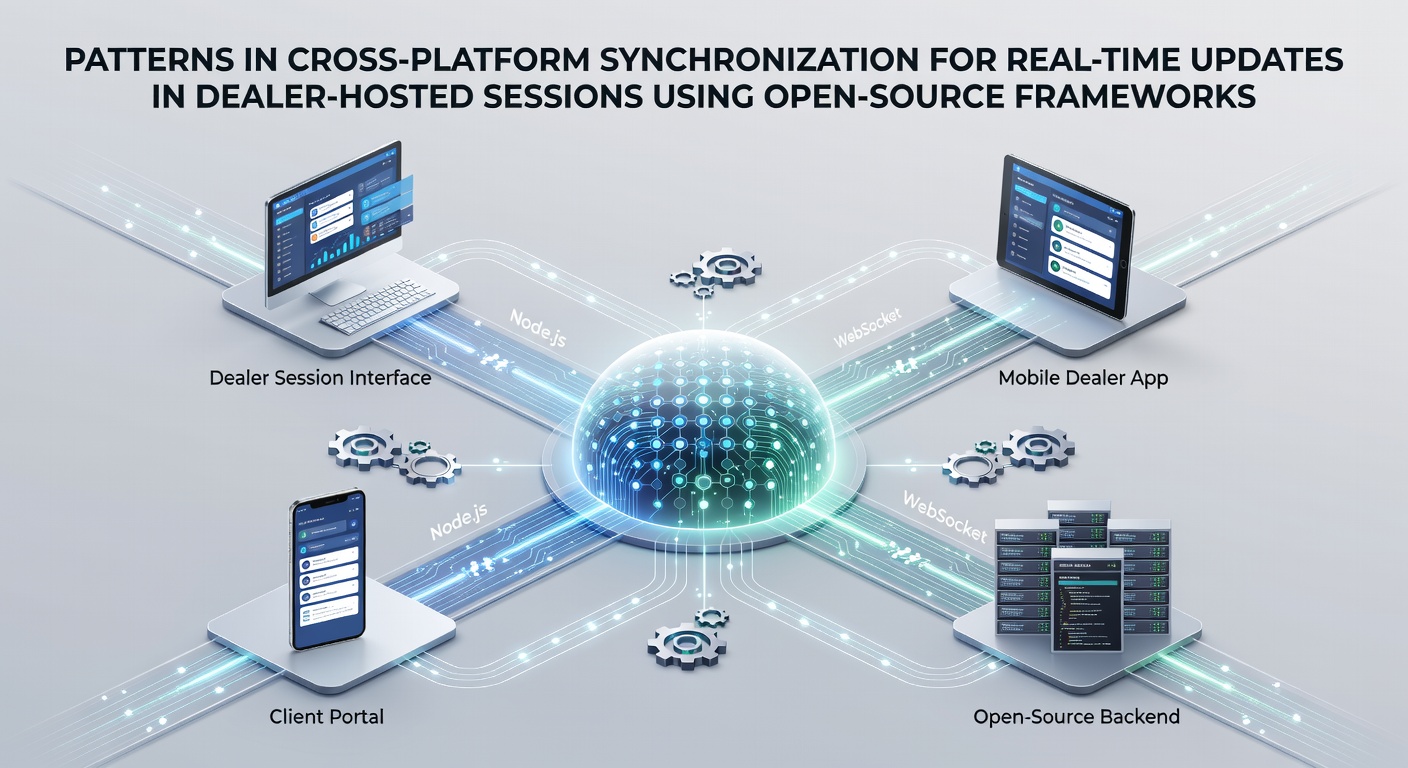
Patterns in Cross-Platform Synchronization for Real-Time Updates in Dealer-Hosted Sessions Using Open-Source Frameworks
Dealer-hosted sessions in online environments rely on seamless data flow across mobile, desktop, and tablet interfaces, and patterns for cross-platform synchronization have emerged as essential tools for maintaining consistent states during live interactions. These patterns address the need to push updates like card draws, bet placements, and player actions without noticeable delays, adn open-source frameworks provide the backbone for implementing such systems at scale.
Core Synchronization Patterns in Live Dealer Environments
Publish-subscribe models stand out as a primary pattern where a central broker distributes messages about game events to all connected clients, and this approach allows devices on different platforms to receive identical information streams while handling their own rendering logic. Event sourcing complements this by logging every state change as an immutable event, which enables systems to replay sequences and reconcile discrepancies across platforms when network interruptions occur. Observers note that these patterns work together effectively because the pub-sub layer handles immediate dissemination while event logs ensure long-term consistency.
Another widely adopted pattern involves command-query responsibility segregation, which separates write operations for player actions from read operations for displaying updates, and this division reduces contention in high-traffic dealer sessions. Data indicates that platforms using this separation experience fewer bottlenecks during peak betting windows, particularly when multiple users interact simultaneously with the same table.
Open-Source Frameworks Driving Real-Time Capabilities
Socket.IO has become a staple for establishing persistent connections that support bidirectional communication, and developers integrate it with Node.js servers to broadcast dealer actions across thousands of concurrent sessions. Redis Pub/Sub adds lightweight messaging layers that complement Socket.IO by managing channel subscriptions, while Apache Kafka handles higher-volume event streams when session logs require durable storage and replay capabilities. Researchers have documented these combinations in technical papers, noting that the frameworks scale horizontally through clustering features without requiring proprietary licensing.
WebRTC integration appears in many implementations for direct peer-assisted video feeds from dealer tables, yet the synchronization of overlay data such as timers and bet totals still routes through the aforementioned frameworks. Those who have studied deployment logs report that combining WebRTC with Redis reduces server load by offloading media while keeping control messages centralized.
Handling Latency and Consistency Across Devices
Network variability between regions creates challenges for maintaining synchronized views, and techniques such as optimistic UI updates allow clients to reflect local actions immediately while awaiting server confirmation. Conflict resolution algorithms then merge divergent states, using timestamps or vector clocks to determine the authoritative sequence of events. Figures from industry monitoring tools reveal that these methods keep perceived latency under 200 milliseconds in most tested configurations during 2026 deployments.
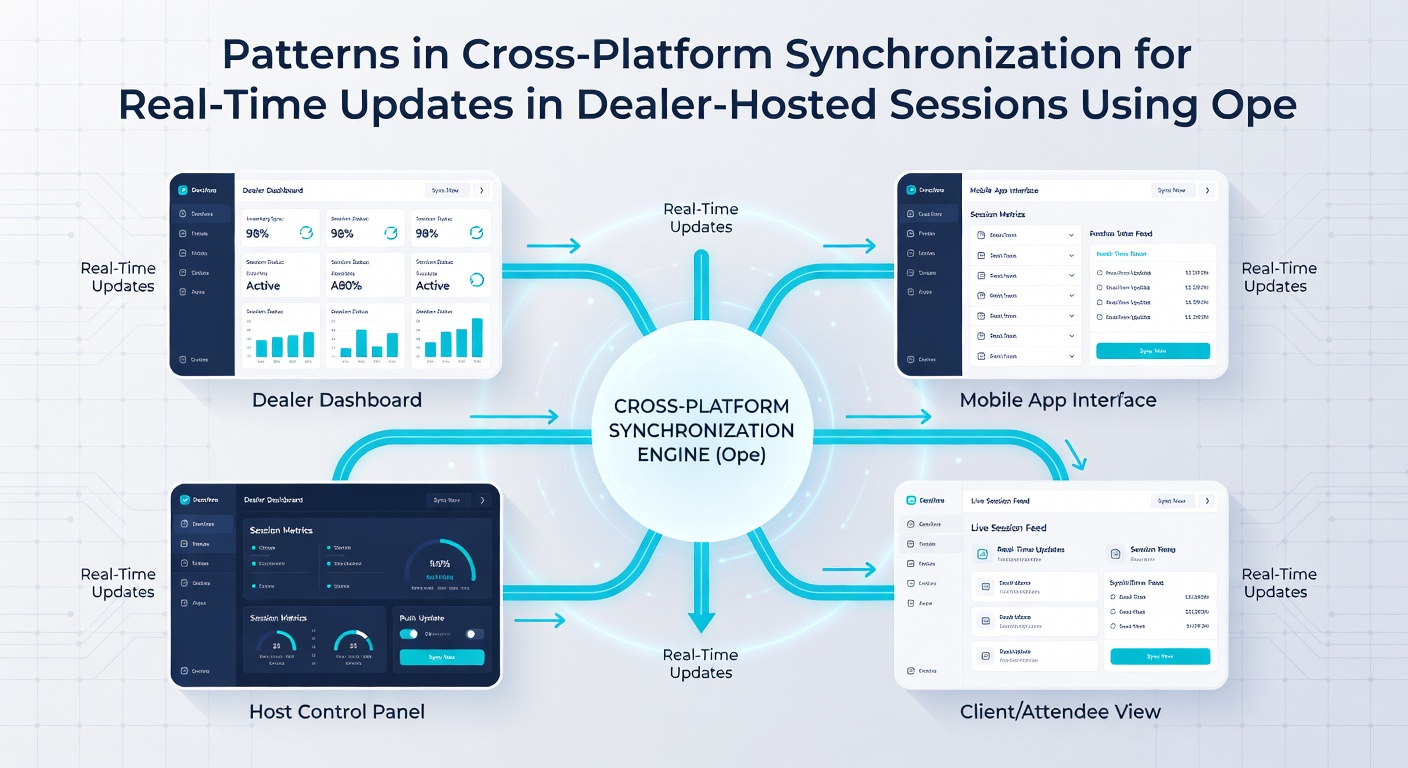
Operational transformation provides an alternative for text-based chat elements within sessions, transforming concurrent edits into a coherent final state, and this proves useful when players exchange messages alongside active gameplay. The reality is that no single pattern resolves every edge case, which leads many operators to layer multiple approaches based on specific session requirements.
Developments Observed in Mid-2026
By May 2026, several open-source projects released updates that improved connection recovery after brief disconnections, and these enhancements directly benefit dealer-hosted sessions where players switch networks mid-game. Regulatory bodies in multiple jurisdictions began referencing synchronization reliability in their technical standards, prompting operators to adopt more robust logging practices. A report from the International Telecommunication Union highlighted metrics on real-time protocol performance across gaming platforms, while another analysis from the American Gaming Association documented adoption rates of open-source tools among licensed operators.
Case studies from mid-sized platforms show that migrating from proprietary solutions to Kafka-based event streams cut infrastructure costs while improving cross-platform parity. Observers note that these shifts occurred alongside broader adoption of container orchestration, which simplified scaling the synchronization layers during live events.
Conclusion
Patterns in cross-platform synchronization continue to evolve alongside open-source framework capabilities, delivering the reliability required for dealer-hosted sessions that span diverse devices and network conditions. Evidence from production environments and technical documentation confirms that combining established patterns with tools such as Socket.IO, Redis, and Kafka produces measurable improvements in update consistency. As standards bodies release additional guidance, operators maintain focus on these approaches to support uninterrupted real-time experiences through the remainder of 2026 and beyond.