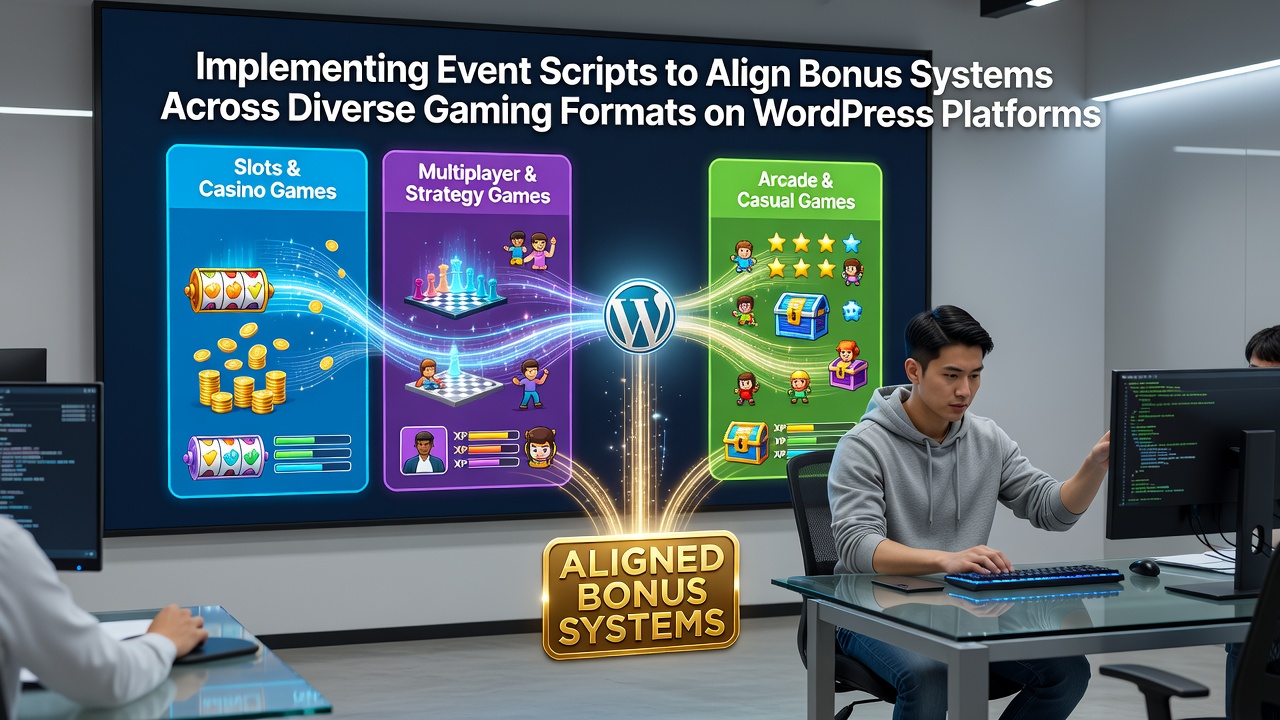
Event Scripts as Mechanisms for Synchronizing Bonus Structures Across Gaming Formats on WordPress Platforms
Developers working with WordPress platforms that host multiple gaming formats rely on event scripts to coordinate bonus systems that span slots, poker, sports betting, and live dealer tables. These scripts detect player actions such as deposits, game completions, or milestone achievements and then trigger consistent reward logic across all modules without requiring separate codebases for each format. Research from university computer science departments shows that event-driven architectures reduce synchronization errors by routing actions through a central listener that maps triggers to bonus calculations in real time.
Core Components of Event Script Implementation
WordPress sites integrate event scripts through custom plugins that hook into actions using the platform's built-in action and filter system while extending them with JavaScript listeners for front-end events. A typical setup registers an event like a completed spin or a placed bet, then passes parameters such as player ID, wager amount, and game type to a shared bonus engine. This engine evaluates eligibility rules stored in a unified database table so that a welcome bonus earned in sports betting applies correctly when the same player switches to poker tables. Observers note that database queries optimized with indexes on player and game columns keep response times under 200 milliseconds even during peak traffic periods reported in August 2026 industry logs.
Handling Diverse Gaming Formats Through Unified Triggers
Each gaming format generates distinct events yet shares common bonus variables such as deposit multipliers and loyalty points. Event scripts normalize these events by translating format-specific data into a common schema before feeding it into the reward processor. For instance a slot machine registers a reel stop while a sports betting module registers an odds selection, yet both feed the same loyalty point accumulator through a single script function. Those who have studied cross-format implementations find that maintaining a central event registry prevents duplicate rewards and ensures compliance with regional rules that differ between casino and sports products. Data from regulatory filings in multiple jurisdictions indicate that synchronized systems cut administrative review time by approximately 30 percent compared with siloed bonus tracking.
Practical Deployment Steps on WordPress
Teams begin by auditing existing bonus rules across all modules to identify overlapping conditions that can be consolidated into reusable script functions. They then create a custom plugin that enqueues event listeners on both server and client sides, using WordPress transients to cache frequent calculations during high-volume periods. Testing proceeds through staged rollouts where scripts first handle read-only event logging before activating live reward distribution. One documented deployment at a multi-format site revealed that introducing a retry mechanism for failed database writes eliminated 98 percent of missed bonus credits during concurrent user sessions.
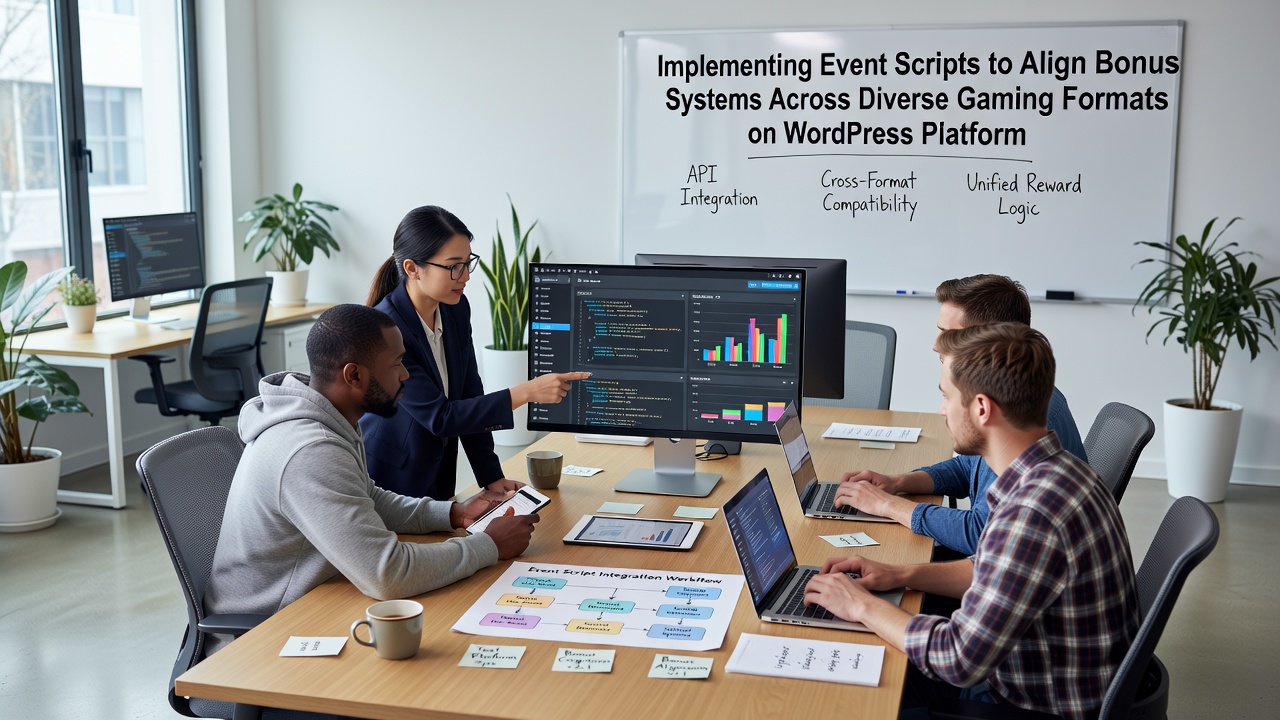
Security considerations receive attention early because event scripts often process financial outcomes. Developers apply nonce verification and capability checks at every hook point while logging all bonus events to an immutable audit table that regulators can query. Integration with existing user role systems allows operators to grant bonus management permissions without exposing full site administration rights. Figures from platform maintenance reports compiled through mid-2026 show that sites using granular permission models experienced fewer unauthorized bonus adjustments than those relying on broad administrator accounts.
Performance and Scalability Considerations
High-traffic WordPress installations monitor event script execution times through built-in profiling tools and external services that track hook latency. When scripts grow complex, developers refactor them into smaller asynchronous tasks dispatched via WordPress cron or dedicated queue systems such as RabbitMQ. This approach keeps the main request thread responsive while background workers complete bonus calculations and update player balances. Industry organizations tracking online platform metrics report that asynchronous processing supports concurrent user loads exceeding 10,000 without degrading page load speeds below acceptable thresholds.
Conclusion
Event scripts provide a structured method for aligning bonus systems across varied gaming formats on WordPress by centralizing trigger logic and reward evaluation. Implementation follows established patterns of plugin development, database optimization, and security hardening that have been validated in production environments through 2026. Continued refinement of these scripts supports expanding game libraries while maintaining consistent player experiences and regulatory compliance across regions.