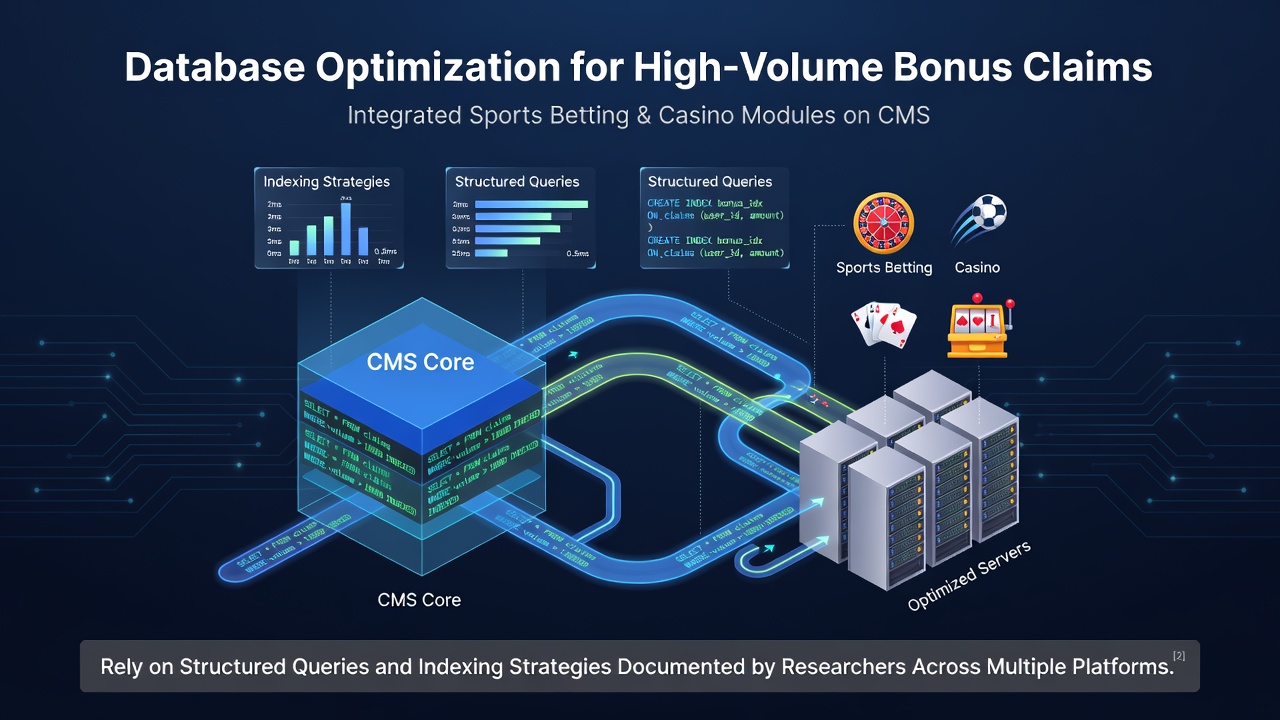
Database Optimization Strategies for Managing High-Volume Bonus Claims in Integrated Sports Betting and Casino Modules
Database systems that support integrated sports betting and casino modules on content management platforms face intense demands when processing bonus claims during peak periods, and researchers have documented several methods that rely on structured queries alongside targeted indexing to maintain performance across different deployments. These approaches address the need for rapid data retrieval while handling thousands of concurrent transactions without compromising accuracy or compliance requirements.
Understanding Transaction Volumes in June 2026
Operators tracking activity through June 2026 report sustained growth in online claims, with platforms managing integrated modules seeing daily volumes that exceed previous benchmarks in multiple jurisdictions. Systems must accommodate spikes triggered by promotional events, and data from regulatory filings indicate that unoptimized databases experience latency increases that affect user experience and settlement times. Those who've studied these environments note that bonus claim tables often become bottlenecks when indexes fail to align with common access patterns such as user identification, claim timestamps, and game-type filters.
Core Indexing Approaches That Scale
Effective indexing begins with composite keys that combine frequently queried columns, allowing the database engine to locate records without full table scans during high-traffic windows. Researchers across platforms have shown that adding indexes on columns like account identifiers, promotion codes, and status flags reduces query execution times significantly when claims arrive in rapid succession. Partitioning strategies further support this by dividing large tables according to time ranges or geographic regions, which keeps individual index sizes manageable and improves maintenance operations during live operation.
Database administrators also implement partial indexes that target only active or pending claims rather than historical data, concentrating resources where they deliver the greatest performance gain. This method proves especially useful in content management systems where plugin architectures introduce additional query layers that must integrate with core database structures.
Structured Query Techniques for Reliability
Structured queries rely on prepared statements and parameterized inputs to prevent injection risks while enabling the query planner to reuse execution plans across similar requests. Observers note that rewriting ad-hoc queries into stored procedures or views centralizes logic and reduces network overhead when modules call the same data repeatedly. In integrated environments, joins between user profiles, transaction logs, and bonus eligibility tables benefit from explicit column selection instead of wildcard selections, which limits data transfer volumes during peak claim processing.
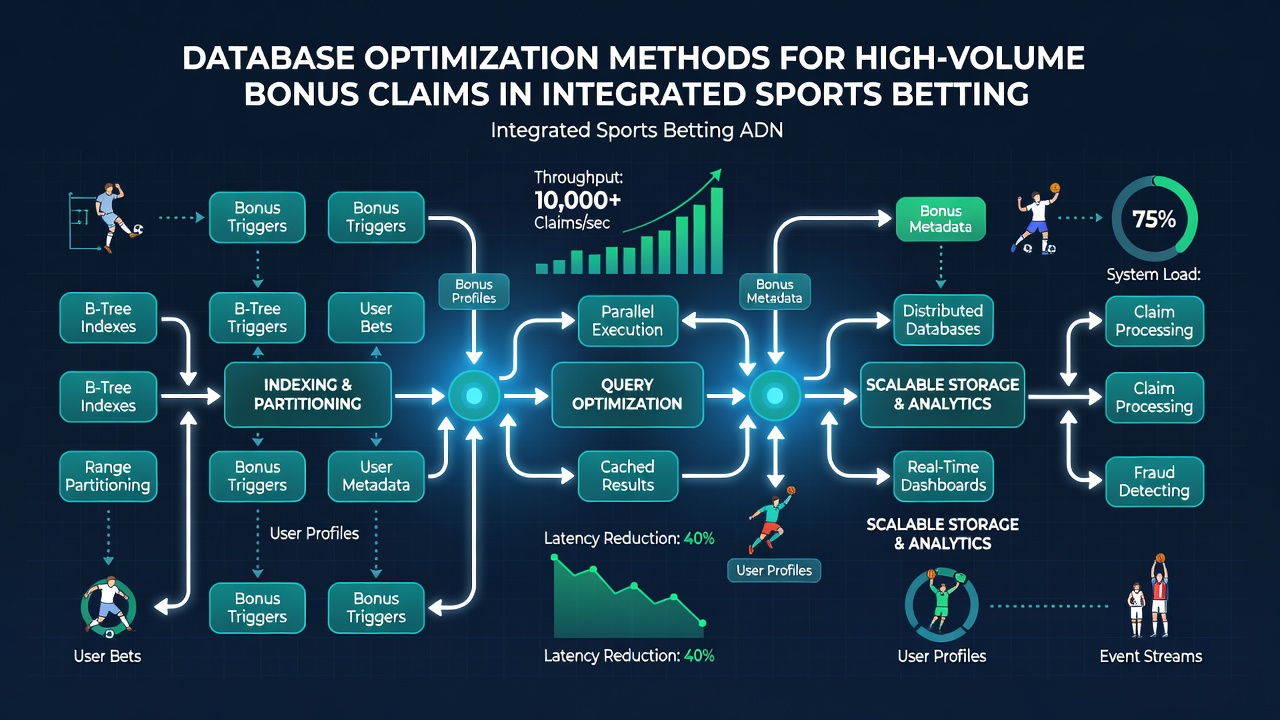
Query rewriting tools available in modern database systems allow administrators to identify slow-running statements and introduce hints that guide the optimizer toward index usage. Studies conducted on production gaming platforms reveal that such adjustments cut average response times by measurable percentages when applied consistently across sports betting and casino claim flows.
Integration with Content Management Systems
Content management platforms hosting these modules often operate on top of shared database instances, which requires careful coordination between CMS caching layers and direct database optimizations. Developers employ object caching for eligibility checks while reserving database-level optimizations for the final claim commit steps, and this layered approach prevents redundant data fetches during user sessions. Those managing multi-site installations have documented success when aligning database connection pooling settings with expected concurrent claim rates, thereby avoiding connection exhaustion during promotional surges.
Additional techniques include asynchronous processing queues that decouple claim validation from immediate database writes, allowing the system to acknowledge user actions while background workers complete indexing updates. This separation maintains responsiveness even when underlying tables undergo reorganization or index rebuilds.
Monitoring and Continuous Adjustment
Performance monitoring tools track key metrics such as query latency, index hit ratios, and lock contention, providing the data needed to refine strategies over time. Industry reports from sources including the New Jersey Division of Gaming Enforcement highlight how operators using these metrics achieved stable operation during record claim periods in early 2026. Another perspective comes from research published by the Griffith Law School gambling studies group, which examined optimization patterns across international platforms and identified consistent benefits from proactive index maintenance schedules.
Conclusion
Database optimization for high-volume bonus claims ultimately rests on the disciplined application of indexing, structured querying, and architectural adjustments that researchers continue to validate across diverse platforms. Platforms that adopt these documented methods demonstrate improved throughput and reduced processing delays, supporting reliable operation of integrated sports betting and casino modules within content management environments as volumes continue to evolve through 2026 and beyond.