Coordinating Jackpot Alerts with Poker Leaderboards via Modular Plugin Chains on Gaming Sites
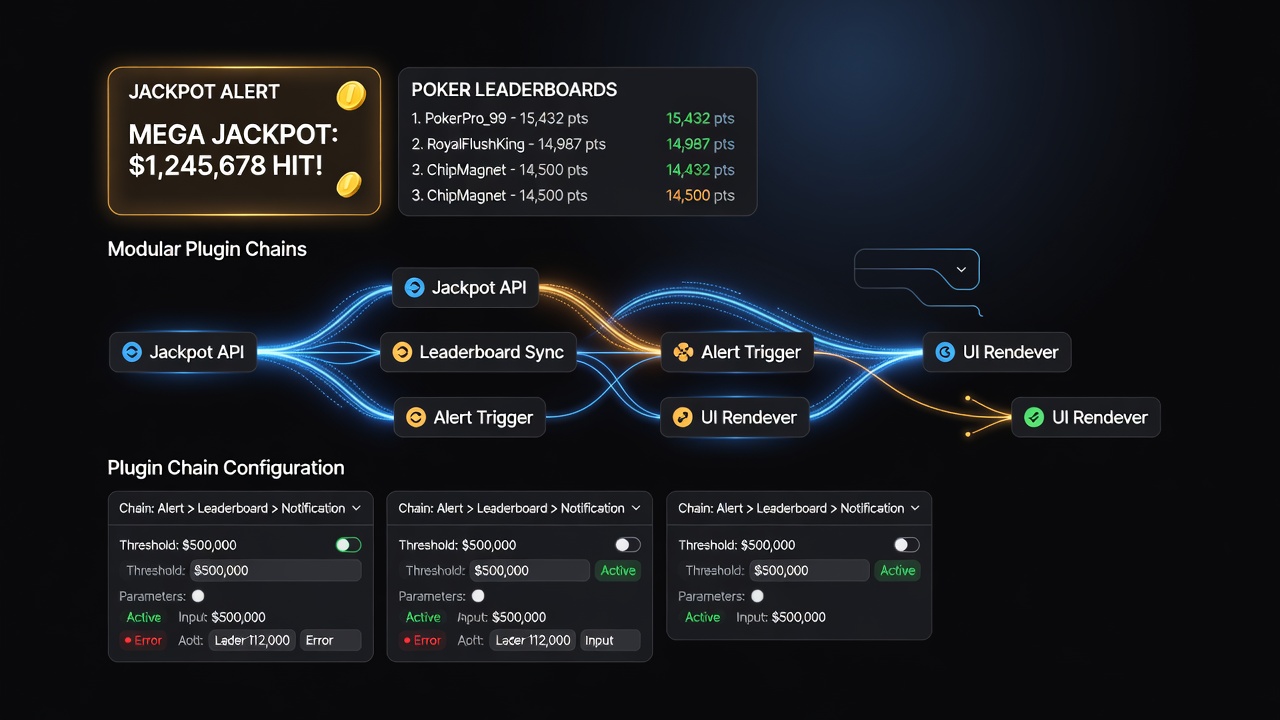
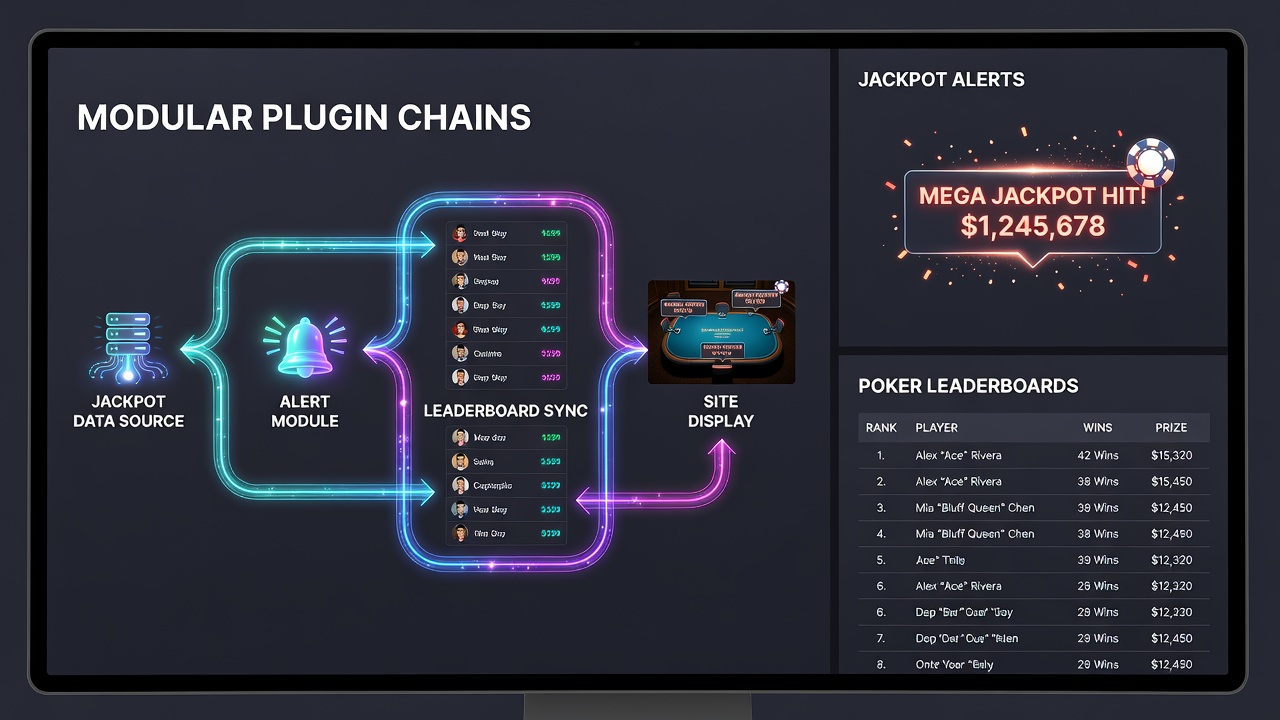
Modular plugin chains allow gaming sites to link jackpot alert systems directly to poker leaderboards through sequenced code modules that trigger updates in real time. These chains operate by passing data packets between independent plugins, where one module detects a jackpot threshold while another refreshes leaderboard rankings without reloading the entire page. Operators who deploy such systems in July 2026 report that synchronization occurs through event listeners embedded in the core framework, enabling alerts to appear alongside updated player standings within milliseconds of a qualifying hand.
How Modular Plugin Chains Function in Practice
Developers assemble these chains by stacking lightweight scripts that each handle a discrete task, such as polling the jackpot database or querying active poker tables for score changes. One plugin monitors progressive jackpot meters across multiple games, while the next module in the sequence formats that data for leaderboard integration and pushes notifications to connected user sessions. Data flows through defined hooks that prevent conflicts, so a jackpot win on a slot game can simultaneously update a shared poker leaderboard if the site configures cross-game eligibility rules. Research from the American Gaming Association shows that sites using chained plugins cut synchronization delays by up to 40 percent compared with standalone alert scripts.
Integration Points Between Jackpots adn Leaderboards
Jackpot alerts typically include prize amounts, winner usernames, and game identifiers, yet poker leaderboards require additional fields such as hand rankings and session durations. Modular chains resolve this mismatch by inserting transformation layers that map alert data to leaderboard schemas before display. A central dispatcher plugin routes the transformed information to both the alert overlay and the ranking table, ensuring consistency across views. Observers note that this approach lets administrators toggle individual modules without disrupting the full chain, which proves useful when testing new jackpot rules or leaderboard filters during peak traffic periods in mid-2026.
Implementation Steps on WordPress-Based Gaming Platforms
Site administrators begin by installing a core event bus plugin that registers custom hooks for jackpot and leaderboard events. Subsequent modules attach to these hooks in a declared order, with each module declaring its dependencies so the system loads them sequentially. Configuration occurs through a settings panel where operators define trigger conditions, such as jackpot values exceeding a set threshold or leaderboard position changes within the top ten. Testing follows a staged rollout: first in a sandbox environment to verify data integrity, then on a limited player cohort before full deployment. Figures from industry reports indicate that properly sequenced chains handle concurrent alerts from dozens of tables without measurable lag.
Performance Considerations and Data Handling
Each plugin in the chain adds minimal overhead when written to use asynchronous calls and cached queries. Heavy database operations stay isolated in background workers, while the front-end modules focus on rendering alerts and refreshing table rows. Sites that monitor resource usage during July 2026 updates found that optimized chains consume less than 5 percent additional CPU during high-volume periods. Error handling modules sit at the end of the chain to log failed updates and retry operations automatically, which maintains leaderboard accuracy even when jackpot data arrives out of sequence.
Case Examples from Operating Platforms
One North American operator integrated a five-module chain that connected three jackpot pools to a daily poker leaderboard, resulting in unified notifications that appeared on both desktop and mobile interfaces. Another platform in the Asia-Pacific region added conditional logic modules so only players active in poker tournaments received jackpot alerts tied to leaderboard climbs. These implementations rely on open plugin standards that allow third-party developers to contribute specialized modules without rewriting core synchronization logic. Data from the Australian Gaming Research Centre confirms that such modular approaches scale effectively across sites serving thousands of simultaneous users.
Conclusion
Modular plugin chains provide a structured method for aligning jackpot alerts with poker leaderboards on gaming sites by sequencing discrete functions through shared event systems. The approach supports incremental updates, reduces development friction, and maintains real-time consistency across features. As platforms continue refining these architectures through 2026, the focus remains on reliable data exchange and efficient module management rather than monolithic code replacements.