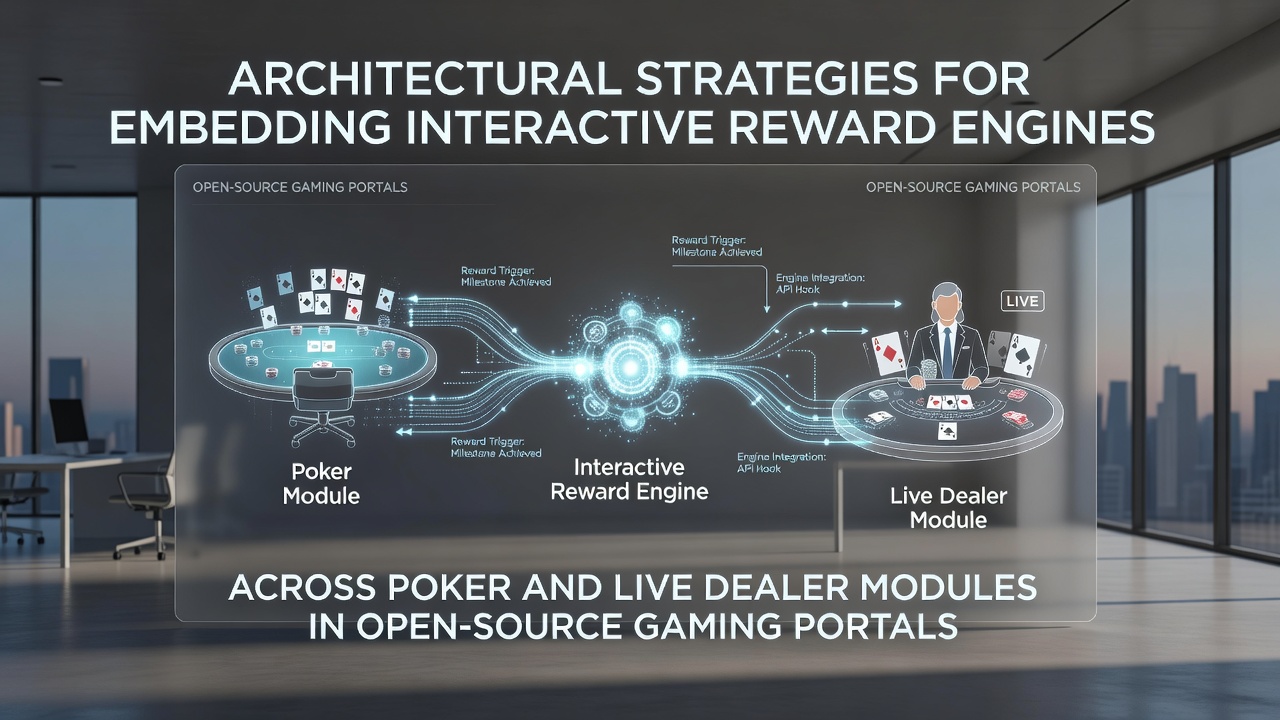
Architectural Strategies for Embedding Interactive Reward Engines Across Poker and Live Dealer Modules in Open-Source Gaming Portals
Developers working with open-source gaming portals have adopted layered architectures that separate core game logic from reward processing systems, allowing interactive engines to trigger bonuses based on real-time player actions without disrupting ongoing sessions. These designs often rely on event-driven frameworks where poker hand completions and live dealer outcomes feed directly into centralized reward modules through standardized APIs.
Core Architectural Components
Interactive reward engines typically consist of a rules engine, a player state tracker, and an event listener layer, all connected via message queues in systems built on frameworks like Node.js or Python with RabbitMQ. According to industry reports from the European Gaming and Betting Association, such separation supports scalability across multiple game types while maintaining audit trails required by regulators in various jurisdictions. The rules engine evaluates conditions such as consecutive wins in poker or dealer interaction streaks, then dispatches rewards through the same queue system that handles game state updates.
Integration Patterns for Poker Modules
Poker modules in open-source environments commonly expose hooks at key decision points like pre-flop actions and showdown resolutions, enabling reward engines to inject personalized incentives such as loyalty points or tournament entries. Data from the Alcohol and Gaming Commission of Ontario shows that portals using these patterns reported higher session continuity in July 2026 compared to earlier monolithic implementations. Developers achieve this by wrapping existing poker logic with middleware that publishes events in JSON format, allowing the reward system to subscribe without altering the base game code.
Event Synchronization Techniques
Real-time synchronization between poker tables and reward engines uses WebSocket connections paired with database transactions that commit both game results and reward allocations atomically. This approach prevents discrepancies during high-volume periods, while open-source libraries like Socket.IO facilitate the bidirectional communication needed for immediate player notifications.
Adaptations for Live Dealer Modules
Live dealer modules introduce additional complexity because physical table actions must map to digital reward triggers through video stream overlays and dealer console integrations. Reward engines in these setups monitor chat interactions and betting patterns via API endpoints exposed by the dealer software, then activate bonuses such as instant cashback during specific rounds. Research published by the University of Nevada's gaming technology program indicates that modular designs reduced integration time by approximately 30 percent when portals transitioned from proprietary systems in early 2026.

One common pattern involves embedding reward logic inside containerized services that run alongside the live stream server, pulling data from optical character recognition tools applied to dealer cards and chips. This keeps the reward engine decoupled yet responsive to physical game events.
Security and Compliance Considerations
Embedding reward engines requires robust access controls and encryption for player data flowing between modules, with many portals adopting OAuth2 flows and role-based permissions within their open-source stacks. Regulatory filings from the Australian Communications and Media Authority highlight the need for immutable logs that capture both game outcomes and reward calculations, a requirement met through append-only databases like Apache Cassandra in several documented implementations.
Conclusion
Architectural strategies centered on event-driven modularity and API-driven separation have enabled open-source gaming portals to embed interactive reward engines effectively across poker and live dealer environments. These approaches support regulatory compliance and operational flexibility while accommodating the distinct demands of each game format through standardized communication layers and atomic transaction handling.