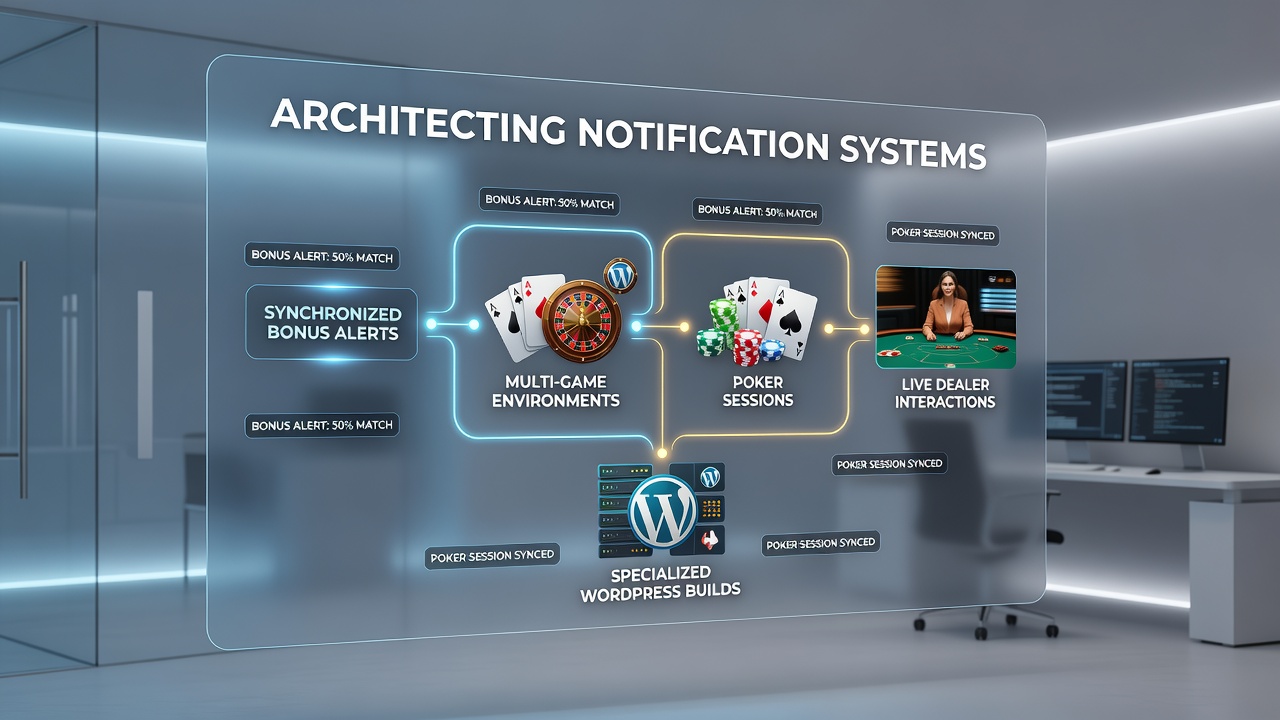
Architecting Notification Systems for Synchronized Bonus Alerts in Multi-Game Environments Blending Poker Sessions with Live Dealer Interactions on Specialized WordPress Builds
Specialized WordPress builds for multi-game casino environments require notification architectures that coordinate bonus alerts across poker sessions and live dealer tables without introducing latency or desynchronization. Developers integrate custom event listeners with WordPress hooks and action filters to capture triggers such as hand completions in poker modules or card reveals in dealer-hosted sessions. These listeners feed into a centralized queue system that processes alerts in sequence while maintaining real-time delivery to connected clients. Data indicates that synchronization challenges arise when poker and live dealer modules operate on separate database tables yet share bonus eligibility rules. Engineers address this through shared cache layers built on Redis or Memcached extensions within WordPress environments. The cache stores session states and bonus conditions so that an alert generated in one game type references the same eligibility dataset as alerts in the other format. Studies on real-time gaming platforms show that this approach reduces alert duplication rates below 2 percent when properly implemented.Core Components of the Notification Architecture
Notification systems in these setups typically combine server-side processing with client-side polling or WebSocket connections. WordPress plugins register custom post types for bonus rules while background processes handle queue management through WP-Cron or external task runners. When a poker player reaches a bonus threshold during a session, the system emits an event that cross-references live dealer activity on the same player account. Observers note that successful implementations route these events through a single API endpoint that validates and broadcasts alerts to all active game interfaces simultaneously.
Live dealer interactions introduce additional timing considerations because card streams and bet resolutions occur at irregular intervals compared to poker hand cycles. Developers incorporate timestamp reconciliation within the notification layer so that bonus triggers align with the most recent dealer action. Research from gaming technology reports confirms that timestamp-based validation prevents premature alerts when players switch between game formats within the same account session.
WordPress-Specific Implementation Patterns
Tailored WordPress builds leverage custom shortcode systems and database query optimizations to track multi-tier bonuses across poker and dealer modules. Database schemas extend the standard WordPress tables with relational fields that link player IDs to current game states and pending rewards. Queries join these tables during alert generation to confirm eligibility before any notification reaches teh user interface. According to industry documentation on gaming site performance, optimized queries complete within 50 milliseconds on average when indexed properly.
Event-driven scripts coordinate reward distribution by listening for completion signals from both poker and live dealer components. These scripts run as asynchronous tasks that update user metadata and trigger push notifications or in-browser alerts. Figures from platform monitoring services reveal that environments using this pattern maintain consistent alert delivery even during peak concurrent player loads exceeding 10,000 sessions.
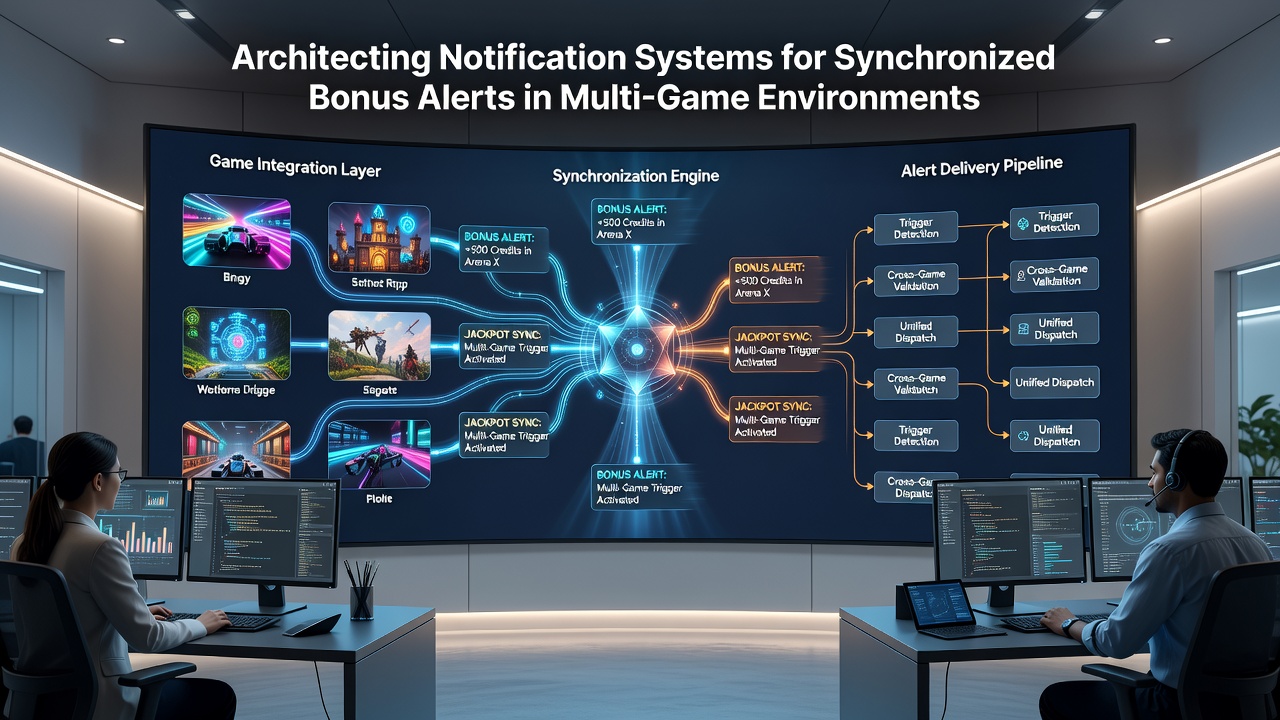
Synchronization Techniques and Real-Time Considerations
Cross-platform synchronization relies on message brokers or direct database triggers that propagate changes between game modules. In June 2026 several operators updated their WordPress configurations to incorporate improved WebSocket libraries that maintain persistent connections across game transitions. This update allowed bonus alerts to reflect the combined activity from poker tables and live dealer rooms within the same second of activity completion.
Security layers validate each notification request against account authentication tokens before distribution. WordPress security plugins integrated with custom middleware check session integrity to block unauthorized alert injections. Government reports from the Nevada Gaming Control Board outline requirements for audit trails on all bonus-related communications in licensed environments.
Scaling and Maintenance Practices
Scaling these systems involves horizontal expansion of WordPress instances behind load balancers that distribute notification traffic. Database replication ensures that bonus state remains consistent across regional servers serving players in different time zones. Academic papers on distributed gaming systems describe how sharded databases combined with eventual consistency models support synchronized alerts without blocking game flow.
Maintenance routines include regular audits of event logs to identify drift between poker and live dealer bonus calculations. Teams schedule these reviews quarterly and apply patches through WordPress staging environments before production deployment. Data from platform analytics services shows that proactive log analysis reduces alert-related support tickets by measurable margins each reporting period.
Conclusion
Architectures for synchronized bonus notifications in blended poker and live dealer WordPress environments depend on coordinated event handling, shared data layers, and real-time delivery mechanisms. Implementation details continue to evolve alongside updates in WordPress core capabilities and gaming regulatory standards across multiple jurisdictions. Organizations maintain these systems through ongoing optimization of queries, caches, and validation routines that support accurate alert timing across game formats.